



6th National Pharmacovigilance Week Celebration 2026 – Day 3 at N.E.T. Pharmacy College, Raichur
As part of the 6th National Pharmacovigilance Week Celebration – 2026, Day 3 of the week-long programme was conducted at N.E.T. Pharmacy College, Raichur, focusing on practical ADR reporting and the emerging field of cosmetovigilance.
Session 1: Practical Orientation on ADR Reporting and Documentation
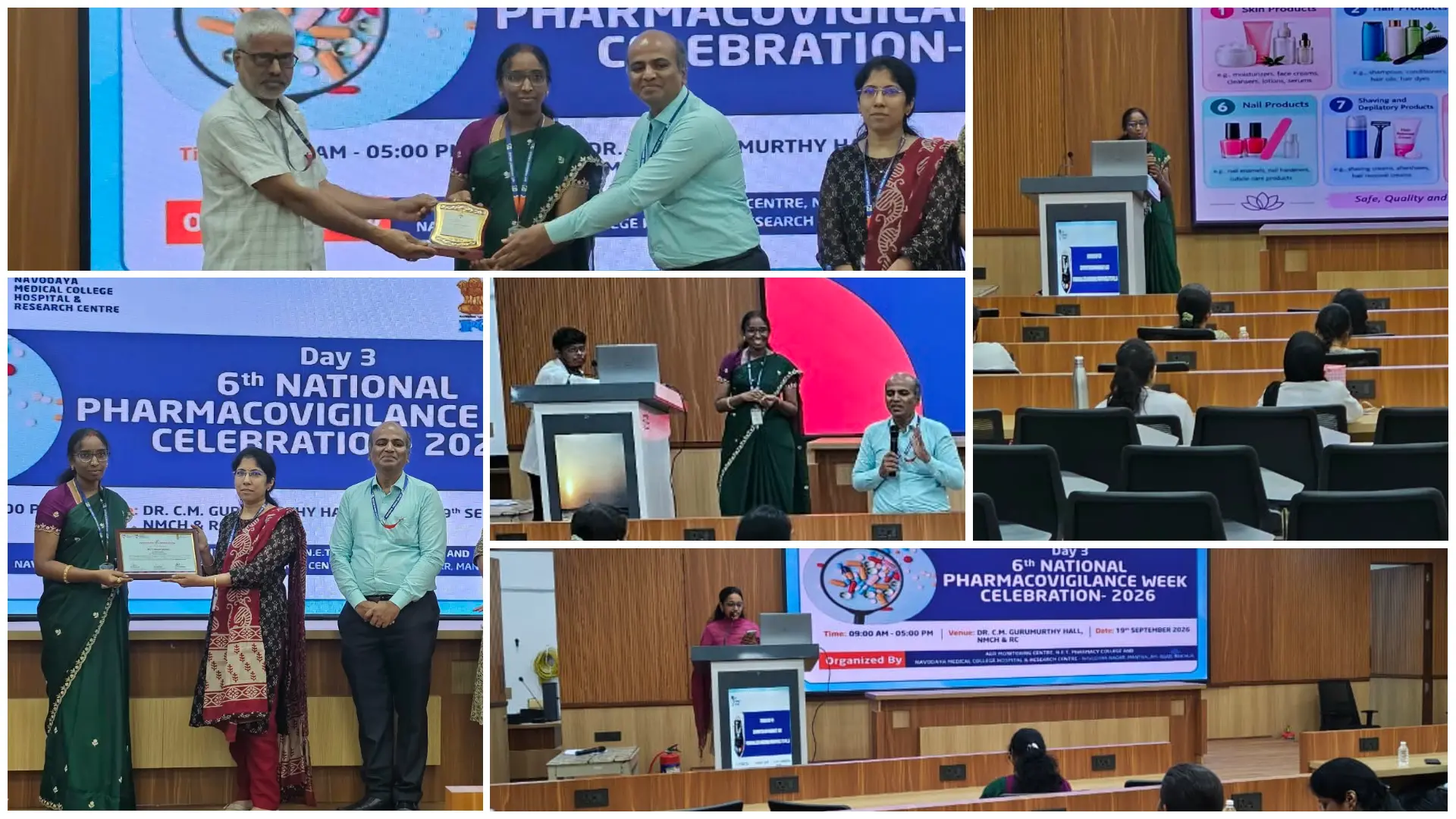
The first session was conducted by Dr. Rashmi, Lecturer, Department of Pharmacy Practice, N.E.T. Pharmacy College, Raichur, who provided a practical orientation on Adverse Drug Reaction (ADR) reporting and documentation. She explained the correct procedure for filling ADR reporting forms and the essential information required while documenting a suspected adverse drug reaction.
The session included practical guidance on distinguishing suspected and unexpected adverse reactions, documenting relevant case information and using the Naranjo Scale for assessing the probability of a causal relationship between a suspected medicine and an adverse event.
Dr. Rashmi further introduced the participants to VigiFlow, demonstrating the process of entering ADR information into the electronic reporting system. The session covered the appropriate use of MedDRA terminology, selection of relevant terms, completion of case details and submission of ADR reports through the software. The practical demonstration helped participants understand the process from ADR identification and documentation to electronic submission.
Session 2: Cosmetovigilance – From Beauty to Safety
The second session focused on Cosmetovigilance and was delivered by Mrs. I. Aparna Lakshmi, Associate Professor, Department of Pharmacology, N.E.T. Pharmacy College, Raichur, on the topic “From Beauty to Safety: The Emerging Role of Cosmetovigilance.”
Mrs. Aparna Lakshmi explained the concept and importance of cosmetovigilance and highlighted the need to monitor undesirable effects associated with cosmetic products. She discussed the definition of cosmetics under the Drugs and Cosmetics Act, 1940, including products intended for cleansing, beautifying, promoting attractiveness or altering the appearance of the human body.
She also explained key differences between the regulatory framework for cosmetics and drugs, covering aspects such as regulatory approval, manufacturing requirements, registration and labelling. The session emphasized the importance of safety monitoring for cosmetic products that are widely used by the public.
Felicitation
Following the session, Mrs. I. Aparna Lakshmi was felicitated in recognition of her valuable contribution to the programme.
Participation
The programme witnessed active participation from pharmacy students, Pharm.D interns, nursing students, faculty and staff of N.E.T. Pharmacy College, medical professionals, postgraduate students and faculty members from the Department of Pharmacology.
Key Highlights of Day 3
Day 3 strengthened participants’ practical understanding of ADR documentation, causality assessment, MedDRA coding and VigiFlow-based reporting, while the cosmetovigilance session broadened their awareness of safety monitoring beyond medicines.